-- 02 A note from Robert Sussuma #3DEVELOPING VOCAL AWARENESS - About the Last 5 Lessons (and bonus lessons!)We are continuing the developmental journey into the next lessons. We are going to go deeper into the heart of the vocal matter: the sanctum sanctorum of the vocal self, the larynx and vocal folds. We will then make our way out through the tongue, the pharynx and back to the whole skeleton and vertical voice in action - newly perceived and re-integrated - re-framing a few vocal mysteries along the way. 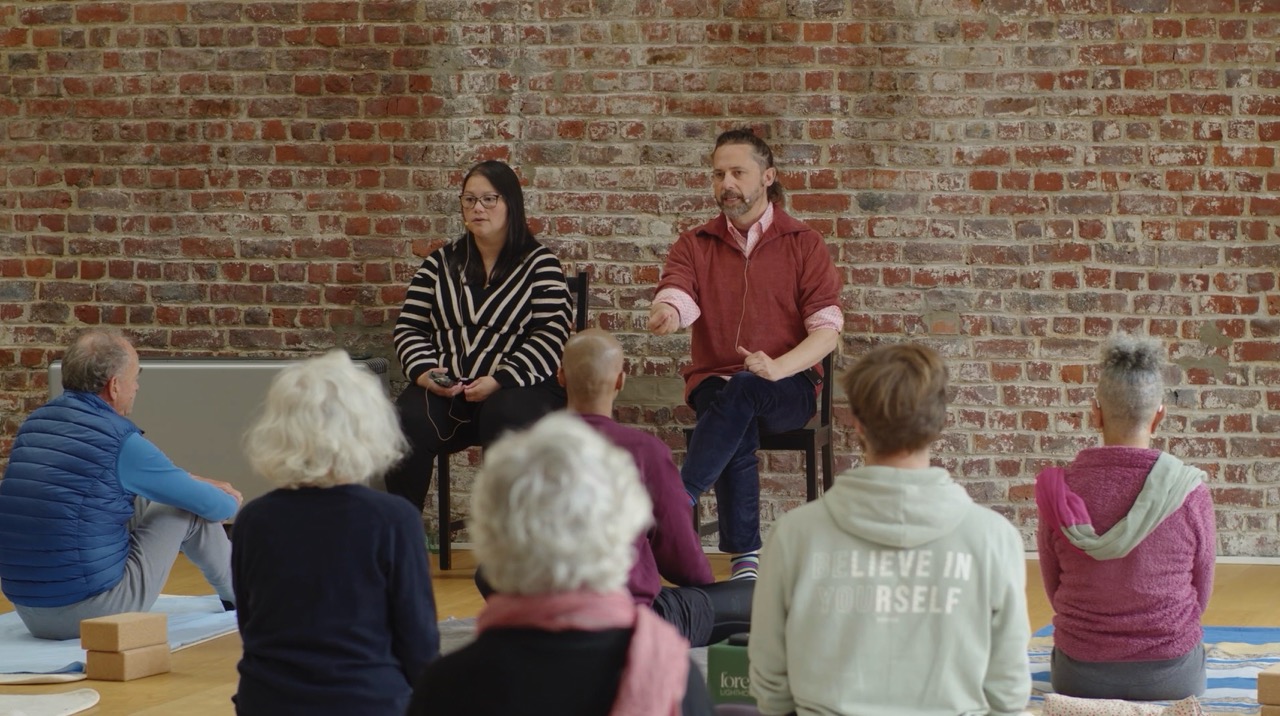 Lesson 6: The Larynx in View (Vocal Fry/Eyes)The laryngeal mechanism is hidden from view. (Unless you have a portable laryngoscope and monitor you can stay hooked up to! Which I don't recommend.) In order to "see it" for ourselves, we need to develop an "image" of our own voice in action. We need to build a kind of somatic hallucination (like with the bones). We can do this by knitting together our sensations, general anatomical knowledge, and sound awareness. With personal experience (trial and error with association), we can connect with it all in real time. It's not a simple thing, but it's definitely possible. It’s crucial for fully developing the "singing self." In this lesson we primarily use the eyes and the imagination. These are combined with a basic sound that approximates vocal fold vibration. This develops a new, more accurate and functional sense of the larynx and vocal folds in action. Lesson 7: The Point of Vocal Transduction (/f-v/)Once the larynx itself becomes clearer in our "vocal self image," and the vocal folds are "in view," we can begin to play with and organize our vocal actions around another beautiful and somewhat elusive (to most) aspect of vocal fold vibration: When the breath (air) is turned into tone by the vibration of the vocal folds, it is no longer air. It is sound (sound waves). The air is "transduced" into sound. Transduction is the act of converting one form of energy into another. (e.g. electricity into light, sound waves into electrical signals, etc.). This kind of process happens every time we make a vocal tone. Our "vocal transducer" allows us to transform the breath/air energy into sound/tone to varying degrees. We can have complete transduction or incomplete transduction (i.e. some leftover air in the sound or no leftover air at all). This corresponds to a more or less "breathy" tone. To have a "pure tone," there must be complete transduction - which isn't what you might assume it to be! There is much nuance here. Once you learn how this process works (how it feels and sounds), we can build on it. We can experience how to organize and balance your vocal transduction skillfully, and nimbly. When we do this, even more becomes possible, with your voice, especially acoustically. As your voice makes its way into the world through the vocal tract (the area between the vocal folds and the lips and nostrils) the tone can be shaped and enhanced effortlessly by various movements and configurations of the lips, tongue, palate and throat. Each shape and movement acoustically affects the tone and one's perception of the sound. (See bonus lessons!) In this lesson, we will take these complex ideas and functions and simplify them into a sound experiment, a vocal coordination, that encapsulates the entire transduction process so that it can be sensed, optimized, integrated and expanded. Later, this coordination can be built upon endlessly for more complex vocal and acoustic actions. Without understanding this basic coordination, so many other aspects of vocal production just don't make sense or will never be efficient or effective, such as breath control, vocal acoustics and more. Lesson 8: The Grace of Gravity (Tongue, prone)The back of the tongue is a powerful potential actor in shaping the sound on the way out of the vocal tract. It is also a place where many of us hold tension (parasitic and perennial) for various reasons related to overall skeletal/postural organization or even emotional and personal history. Learning to release, mobilize, coordinate and integrate this area of the back of the tongue makes so many beautiful and extreme vocal effects possible, easy and playful. In this lesson we will learn to use gravity to our advantage to release the back of the tongue and from there, begin to move it in novel and potent ways. Lesson 9: The Power of the Pharynx (/ch/)I have a voice-related theory that I've been developing - experientially, theoretically and pedagogically - over many years. It underlies all the lessons in this series and beyond. It has two main parts. Part one: There is a little body within the big body. It's upside down and inverted. Within the head and neck is the region we call the vocal tract. It also shares space with the respiratory and digestive tracts. This area hangs from the skull, jaw and spine; the hyoid bone gives it some shape and structure to keep it from collapsing inward. The vocal apparatus is fundamentally soft and floating in suspension from above (like we explore in Lesson 3). It hangs upside down. It reaches deep into the abdomen through connections to the esophagus, trachea and lungs. It has many moving parts and can be configured and re-configured endlessly. These movements follow a different functional logic than the rest of the "skeletal"/vertical body due to the structures' different nature and its reversed relationship to gravity when upright. And, not only is this "little body" hanging from above, it is inverted. Its extremities are most proximal and the more stabilizing and supportive structures are more external and distal. It's a kind of internal reversal of proximal and distal as we normally think of it. To give you a quick idea of what I mean, imagine that the vocal folds meeting at the midline correlate to the "fingertips" of the big body. Part two: If the pelvis is the power center of the big body/skeletal body, the pharynx is the power center of the little body/voice body. The pharynx - particularly the powerful muscles attaching to the inside of C1 - is a fulcrum around which the mouth and throat are suspended and stabilized. When one organizes one's vocal movements around this point (like a tanden) everything becomes easy. There is no loss of movement freedom in front for articulation, or below for voicing and shaping the sound. Imagine holding a kitten by the scruff of its neck. But, we do it from the INSIDE! There's much more to explore with this, but that's the idea. In this lesson, we see just how powerful it is to organize the voice around the pharynx and let everything flow easily and freely from there as vocal intention becomes vocal action without any functional impedance. And, we use a phonemic device to do it! Even better. Lesson 10: The Vertical Voice (Nose/Feet/Throat)At some point, we need to bring it all back together into a functional upright whole - the big body, small body, and all the parts and connection in coordination around vocal action. In this lesson we revisit the nose and throat in a new way while connecting up and down through the many diaphragms of the bodies, big and small. We experience all that we've been exploring in one big pattern - zooming into the details and back out and connecting them in layered ways - in order to let the whole singing self function freely and easily for breathing, voicing, expressing ourselves and more. It's an ending that's also a beginning as it opens up new ways of understanding posture/acture from the inside out and with respect to both "bodies" simultaneously. The 10-lesson Journey: A Fractal PuzzleAs you can see, these lessons definitely layer, connect and interact with each other. Each lesson is a fractal of a fractal, a doorway to many connected, non-linear doorways that can show us something really special and beautiful about our human ability to speak, sing, play with sound, differentiate and create! And this is just the beginning; an initial series to launch the never-ending journey of vocal awareness development. BUT WAIT, there's more! : 2 Bonus lessons!Bonus Lesson #1: Finding your Vocal Sweet Spots (/gng/)This lesson is a culmination of the final three lessons of the basic series. It integrates the tongue, pharynx, nose and skull in order to optimize resonance, vocal timbre and acoustic power with maximal ease and consistency. We do this by incorporating nasal awareness into our sound. The nose really knows a LOT about great singing. Bonus Lesson #2: Put a Ring on It (Overtones)You may have heard of "overtone singing," which is a beautiful and fun party trick for some and an ancient and traditional practice for others. Either way, through the not so mysterious mystery of physics and acoustics each sound is a vibration that has complex properties. Vocal fold vibration has a fundamental tone (a basic vibration at a particular frequency, e.g., 100 oscillations per second) as well as many others, simultaneous promulgations of that fundamental frequency that vibrate at whole number multiples of that fundamental frequency. These are part of the sound we hear without us really knowing they are there. This is what we call the "overtone series" - which has been known and understood in various ways since the time of Pythagoras. And, in many ways, this "invisible music" - the music of the spheres - is the basis of Western Music and singing as we know it. It is also present every time we make a tone, change vowels, sing in harmony with others or hum along with the vacuum cleaner, etc. It's the elusive obvious of sound and music. Although this is an acoustic and perceptual phenomenon, it is also a physical one. Without movement there is no vibration. Without movement there is no shaping of the sound on the way out, and no "highlighting" of the overtones in the note so that we can play with them more artistically. In this lesson we unite sound and movement, acoustics and somatics and explore how the lips, tongue, palate and pharynx can be shaped and re-shaped to bring out the harmonic series in any tone we make. It's just the beginning of a beautiful way to organize vocal sounds and movements by harmonic highlighting. It sounds complicated - and if you want to get into the theory and perception of it all, it is! - but it's also basic and fundamental to voice. It harkens back to our ancient vocal beginnings in a simple, yet profound way. The workshop:In the 5-day workshop in Brussels this August, I will take you through all 10 of the basic lessons and delve into the background details for each lesson - some physical, some theoretical, some artistic and some pedagogical. In the end, this journey will open you to your own voice, and the human voice in general, so that you can begin to work with yourself and your students in a deeply "Feldenkrais" way. I hope you can join us! 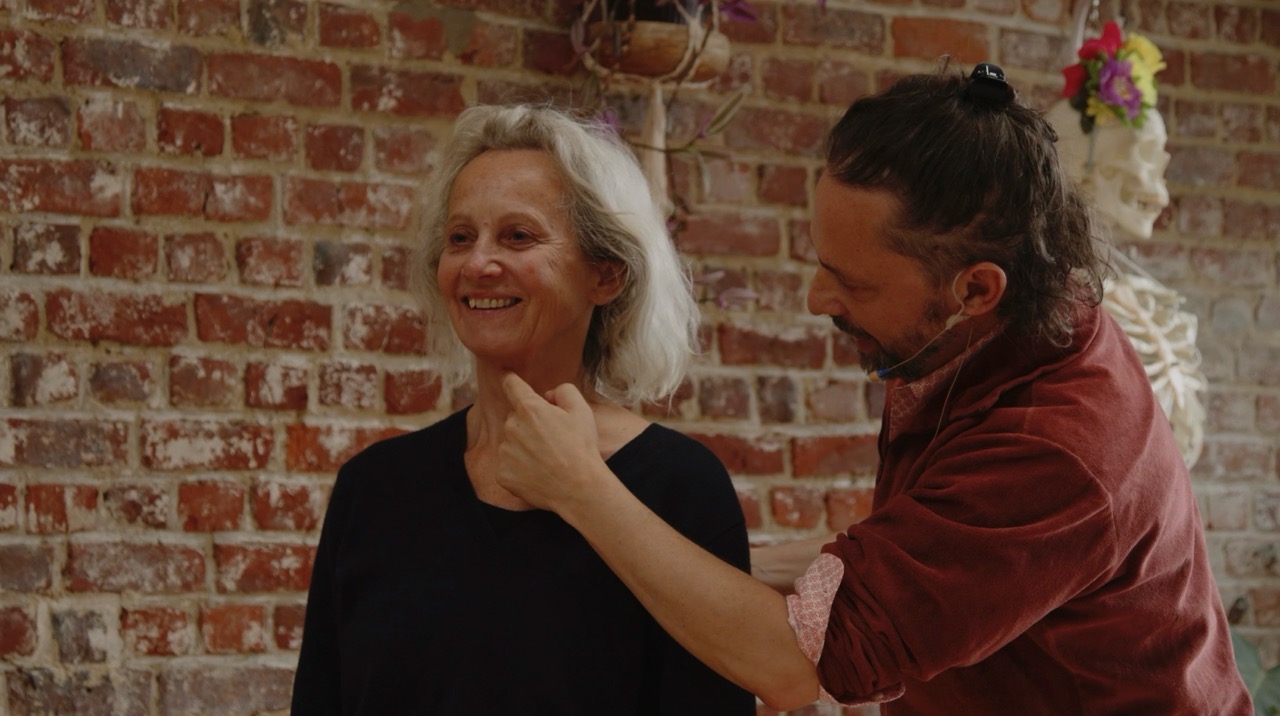 |